
Orthopaedics
Platelet-rich plasma for knee osteoarthritis and tendinopathy: what the evidence says
What studies show about PRP for knee osteoarthritis and tendon problems, its limits, and how it is assessed at our orthopaedic clinic in La Ràpita, Spain.
7 November 2026 · Author: Medical team at Institut Mèdic Especialitzat La Ràpita
See a specialist in La Ràpita

Medical Director · Orthopaedic surgery and traumatology (hip)
Medical Director of IME. Hip surgeon at Hospital Clínic de Barcelona and head of the Hip Unit at Joint Clinic, Barcelona.
Book your visit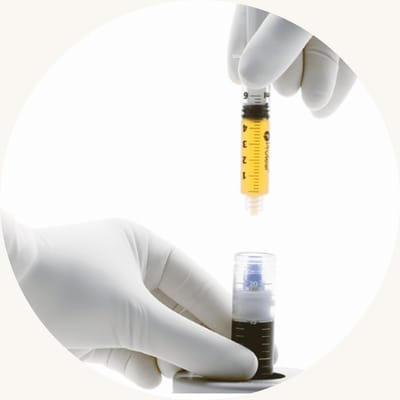
Platelet-rich plasma (PRP) is a concentrate made from the patient’s own blood and injected into a joint or tendon. At Institut Mèdic Especialitzat La Ràpita (IME), it is assessed in our Orthopaedics clinic for patients across Montsià and the Terres de l’Ebre area of southern Catalonia. This article summarises what research has found for knee osteoarthritis and for tendon problems, and where the evidence is still uncertain. To book: +34 697 38 07 86, WhatsApp or Doctoralia via our contact page.
What is PRP and how is it prepared?
A blood sample is taken and spun in a centrifuge to concentrate the platelets, and the concentrate is then injected into the area being treated. The full procedure at IME, with its indications and contraindications, is explained on our platelet-rich plasma page.
One point matters when reading the studies: not all PRP is the same. Preparations differ in platelet concentration, white-cell content (“leukocyte-rich” or “leukocyte-poor”), activation and number of injections. The Cochrane review of soft-tissue injuries had already warned that preparation methods were not standardised (Moraes et al., 2014), which partly explains why results do not always agree.
Does PRP work for knee osteoarthritis?
The honest answer is that the evidence is mixed:
| Study | Comparison | Findings |
|---|---|---|
| Meta-analysis of 18 level-1 trials, 1,608 patients (Belk et al., 2021) | PRP vs hyaluronic acid | Greater improvement in WOMAC scores with PRP; in 6 of the 11 studies measuring pain, less pain with PRP |
| RESTORE trial, 288 patients aged 50+ with mild-to-moderate medial knee osteoarthritis (Bennell et al., 2021) | Three injections of leukocyte-poor PRP vs saline (placebo) | No difference in pain or cartilage volume at 12 months |
| Meta-analysis of 20 placebo-controlled trials (Delgado et al., 2026) | PRP vs placebo | Better pain and function at 6 and 12 months with PRP, but very low certainty of evidence |
In short: some patients improve and several meta-analyses are favourable, but a good-quality placebo-controlled trial found no benefit, and the positive analyses carry low or very low certainty. The 2026 meta-analysis found that younger age and some PRP characteristics were linked to better short-term results, although the authors caution that the effect of each factor cannot be reliably separated (Delgado et al., 2026).
What about tendon problems?
Here too, results depend on the tendon and on the comparison treatment:
- Cochrane review (19 small trials, 1,088 participants): very low-quality evidence, insufficient to support PRP for tendon, muscle and ligament injuries overall (Moraes et al., 2014).
- Tennis elbow (lateral epicondylitis) vs placebo: a meta-analysis of 6 trials with 355 patients found no improvement in pain or function at any point up to 24–26 weeks (Antunes Júnior et al., 2026).
- Vs corticosteroid injections: a meta-analysis of 27 trials with 1,779 patients found similar, or in some sites better, results with steroids at one month, and better medium-term results with PRP in other sites, such as plantar fasciitis at 6 months or tennis elbow; the authors note that long-term effectiveness still needs confirming (Ye et al., 2025).
Is it safe?
Because it uses your own blood, the risk of an allergic reaction is low, although, like any injection, it can cause local pain or bruising. In the tennis-elbow meta-analysis there were no more adverse events with PRP than with placebo (Antunes Júnior et al., 2026).
How do we decide whether PRP makes sense for me?
The decision is individual and is made after assessment by an orthopaedic surgeon. Before deciding, it helps to be able to answer these questions at your appointment:
- What exactly is my diagnosis, and how advanced is it?
- What are my alternatives, and what is the evidence for each?
- What type of PRP would be used, and how many injections?
- What improvement is reasonable to expect, and over what time?
- How should treatment be combined with physiotherapy and exercise?
PRP at IME in La Ràpita
At IME, PRP is offered through the Orthopaedics clinic, with Dr Luis Ramírez Núñez, the centre’s medical director and a hip surgeon at Hospital Clínic de Barcelona, and Dr Sergio Giles. The centre is at Av. del Dr. Ferran, 73, 43540 La Ràpita, and also sees patients from Amposta, Tortosa, Deltebre, Alcanar, Sant Jaume d’Enveja, Ulldecona and Vinaròs. Physiotherapy and rehabilitation are available on site.
Frequently asked questions
Does PRP regrow knee cartilage?
There is no solid evidence that it does. In the RESTORE trial, cartilage volume at 12 months was the same with PRP as with placebo (Bennell et al., 2021). That is why we do not describe it as a treatment that “regenerates” cartilage.
How many injections are needed?
There is no single answer. Studies use different schedules (for example, three weekly injections in the RESTORE trial). Your specialist will explain the schedule and the reasons for it.
Is PRP better than hyaluronic acid?
In the meta-analysis by Belk and colleagues, PRP produced greater functional improvement than hyaluronic acid (Belk et al., 2021), but comparisons with placebo are less favourable. Neither option suits every patient.
Is it covered by health insurance?
It depends on your insurer and policy. Ask us when you book and we will check it with you.
Would you like an assessment? Book your visit
A consultation is the way to find out what is right for you. Book online or call us and we will tell you the next clinic day.
Dr. Luis Ramírez Núñez
Medical Director · Orthopaedic surgery and traumatology (hip)
Medical Director of IME. Hip surgeon at Hospital Clínic de Barcelona and head of the Hip Unit at Joint Clinic, Barcelona.
Doctoralia ratings checked on 8 November 2026.
References
- Belk JW et al. Platelet-Rich Plasma Versus Hyaluronic Acid for Knee Osteoarthritis: A Systematic Review and Meta-analysis of Randomized Controlled Trials. Am J Sports Med. 2021. PMID 32302218
- Bennell KL et al. Effect of Intra-articular Platelet-Rich Plasma vs Placebo Injection on Pain and Medial Tibial Cartilage Volume in Patients With Knee Osteoarthritis: The RESTORE Randomized Clinical Trial. JAMA. 2021. PMID 34812863
- Delgado D et al. Younger age and platelet-rich plasma characteristics influence short-term outcomes in knee osteoarthritis, but independent effects remain uncertain: a systematic review with meta-analysis and meta-regression of placebo-controlled randomised trials. Knee Surg Sports Traumatol Arthrosc. 2026. PMID 42605960
- Moraes VY et al. Platelet-rich therapies for musculoskeletal soft tissue injuries. Cochrane Database Syst Rev. 2014. PMID 24782334
- Antunes Júnior CR et al. Platelet-Rich Plasma Does Not Improve Pain or Function in Patients With Lateral Epicondylitis as Compared With Placebo: A Meta-analysis of Randomized Clinical Trials. Am J Sports Med. 2026. PMID 41508659
- Ye Z et al. Platelet-rich plasma and corticosteroid injection for tendinopathy: a systematic review and meta-analysis. BMC Musculoskelet Disord. 2025. PMID 40200209
The information on this website is for general guidance and does not replace an assessment by a healthcare professional. In an emergency, call 112.